Understanding regional soil types across Canada
Before amending soil, it helps to understand what you are working with. Canada's agricultural soils are broadly grouped into several types that align roughly with geography.
Prairie clay and clay-loam (Alberta, Saskatchewan, Manitoba)
The dark, clay-heavy soils of the Prairies are among the most nutrient-rich in the country but can become compacted and waterlogged in spring. They drain slowly and can form a hard surface crust after heavy rain. Adding coarse organic material — compost, aged straw, wood chip mulch — improves structure and allows water to move more freely through the profile.
Southern Ontario silty clay
Much of southern Ontario's agricultural land sits on silty clay over glacial deposits. These soils can be highly productive once drainage is addressed. Raised beds filled with amended growing mix are a common solution for backyard gardens in the region, bypassing the native soil entirely.
B.C. coastal soils
The Lower Mainland and Vancouver Island benefit from milder temperatures and higher rainfall. Soils here tend to be more acidic (pH 5.5–6.2) due to heavy precipitation leaching calcium and other base minerals. Lime applications may be needed to raise pH for vegetables that prefer a more neutral range.
Canadian Shield and northern gardens
Thin, rocky, acidic soils over exposed bedrock characterize much of northern Ontario and Quebec. Garden space is often limited to containers, raised beds, or small pockets of native topsoil. The growing season is short — sometimes fewer than 100 frost-free days — which favours fast-maturing varieties and cold-tolerant crops.
Testing your soil before amending
Applying amendments without knowing current pH and nutrient levels can lead to imbalances that harm crops. Basic soil test kits are available at most Canadian garden centres and provide readings for pH, nitrogen (N), phosphorus (P), and potassium (K).
Provincial agricultural extensions offer more comprehensive soil testing services. In Ontario, the University of Guelph's laboratory accepts samples for detailed analysis. In Saskatchewan, the provincial government's Crop Protection Laboratory provides similar services. Results typically include specific amendment recommendations for the crops you intend to grow.
Most common vegetables grow best at a pH between 6.0 and 7.0. A pH below 5.5 makes phosphorus and several trace minerals less available to plant roots, even when those nutrients are present in the soil.
pH adjustment
Raising pH (acidic soils)
Ground agricultural limestone (calcitic or dolomitic) is the standard amendment for raising pH in Canadian gardens. Dolomitic limestone also supplies magnesium, which can be beneficial in magnesium-deficient soils. Rates depend on soil type — clay soils require more limestone to achieve the same pH shift as sandy soils. Apply in fall when possible, as limestone works slowly over the winter months.
Lowering pH (alkaline soils)
Alkaline conditions are less common in Canadian gardens but occur in parts of the Prairies where soils contain calcium carbonate. Elemental sulfur is the most common amendment for lowering pH. It works through bacterial action in warm soil, so applying in spring when temperatures are rising allows it to take effect during the growing season.
Building organic matter through composting
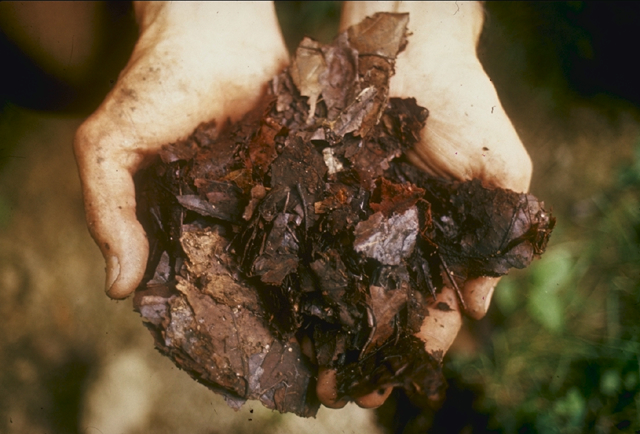
Compost is the most broadly useful amendment across all Canadian soil types. It improves drainage in clay, increases water retention in sandy soils, adds slow-release nutrients, and supports soil biology. The goal over several seasons is to build organic matter content in the 3–5% range.
Cold-climate composting
A compost pile stops decomposing below freezing temperatures but resumes when the pile thaws in spring. In zones 3 and 4, outdoor composting is effectively paused from November through March. Managing a larger pile — at least 1 cubic metre — helps retain heat longer into the fall. Insulating the pile with straw bales or a compost bin designed for cold climates extends the active season.
The carbon-to-nitrogen ratio matters more in colder climates where decomposition is already slowed. Aim for roughly 25–30 parts carbon (dry leaves, wood chips, straw) to 1 part nitrogen (kitchen scraps, fresh grass clippings, coffee grounds). A pile that is too nitrogen-heavy will smell; too much carbon slows breakdown.
| Material | C:N ratio (approx.) | Category |
|---|---|---|
| Dry autumn leaves | 60:1 | Carbon (brown) |
| Straw | 80:1 | Carbon (brown) |
| Wood chips | 400:1 | Carbon (brown) |
| Fresh grass clippings | 17:1 | Nitrogen (green) |
| Vegetable kitchen scraps | 15:1 | Nitrogen (green) |
| Coffee grounds | 20:1 | Nitrogen (green) |
Working with frozen ground in early spring
One of the most common mistakes in Canadian gardens is tilling or working soil when it is still partially frozen or saturated from snowmelt. Clay soils in particular will compact severely if disturbed when wet, and compaction is difficult to reverse without significant effort. The standard test is to squeeze a handful of soil: if it crumbles easily when released, it is ready to work; if it holds together in a dense ball, wait another week.
No-till approaches — where compost and amendments are layered on the surface and allowed to work down naturally — avoid the spring timing problem entirely. Adding a 5–8 cm layer of compost to bed surfaces each fall provides consistent improvement without the risk of damaging soil structure.
Mulching to extend soil productivity
Mulch reduces moisture loss, moderates soil temperature, suppresses weed germination, and adds organic matter as it breaks down. In Canada's variable climate, mulching serves different functions at different times of year.
- Summer: 5–8 cm of straw or wood chip mulch keeps soil cool and moist during heat periods and reduces watering frequency significantly.
- Fall: Applying mulch before the first hard frost insulates soil and allows late crops (spinach, kale, carrots) to continue longer.
- Spring: Remove or pull back mulch early to allow soil to warm; leave it on paths to suppress mud.